Recipes
The Poke Bowl: History, Tradition, and How to Make One at Home
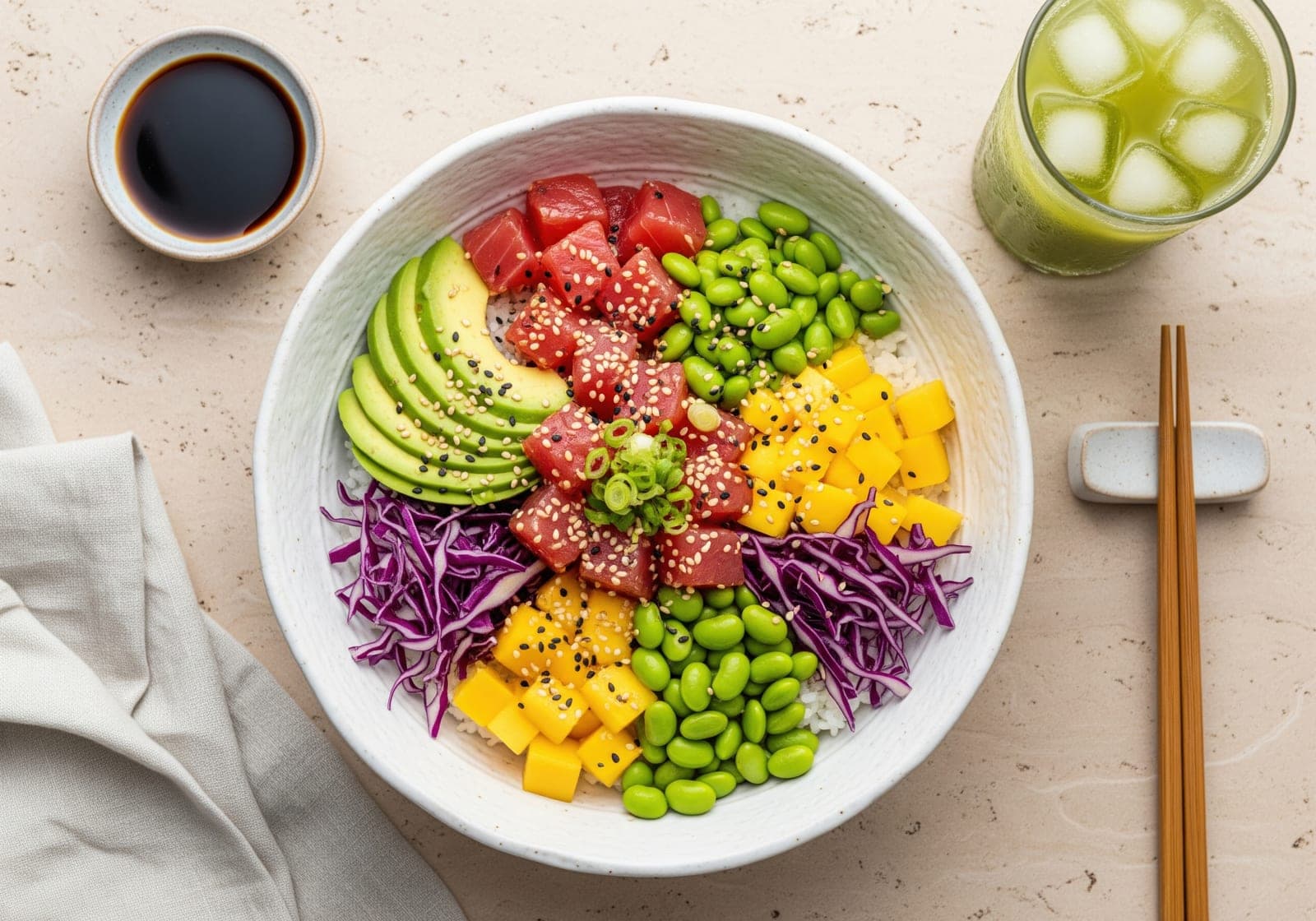
Poke (pronounced poh-kay, rhymes with okay) is cubed raw fish — traditionally ʻahi tuna — seasoned with salt, seaweed, and aromatics. In Hawaii it's been sold from grocery stores and roadside stands since long before mainland restaurants started charging eighteen dollars for a bowl of it.
The word poke means "to slice or cut crosswise" in Hawaiian. The dish is exactly that: fish cut into cubes, dressed with salt and seasoning. Simple, fast, and extraordinarily good when the fish is fresh.
A brief history
The oldest form of poke is weke (goatfish) or heʻe (octopus), rubbed with sea salt and ʻinamona — roasted, ground kukui nut — and eaten immediately after a catch. Hawaiian fishermen would make it on the boat.
Soy sauce entered the picture in the late 19th and early 20th centuries when Japanese and Chinese laborers arrived in Hawaii. Sesame oil, green onion, and chili came with them. By the mid-20th century, what we now call "shoyu poke" — the soy-sesame version you find at every island deli — had become the standard.
The mainland restaurant trend is recent and mostly unrecognizable from the original: too much sweet sauce, undersized fish pieces, and a bowl architecture designed for photography rather than eating. The real version is better.
What makes a real poke bowl
The fish. Sushi-grade ʻahi tuna is traditional, but any fresh, sushi-quality fish works — salmon, octopus, scallop, or snapper. If you can't find sushi-grade locally, buy frozen sushi-grade from a reputable fishmonger rather than substitute with regular supermarket fish.
The seasoning. Less is more. The classic shoyu poke dressing is soy sauce — or coconut aminos for a lower-sodium, soy-free version — sesame oil, and a pinch of sea salt. Mix, toss the fish, sit for five minutes. That's it.
The salt. ʻAlaea Hawaiian sea salt — the traditional red-clay finishing salt — adds a mineral depth that regular sea salt doesn't. Worth using here if you can find it.
The toppings. Green onion, sesame seeds, and nori komi furikake. Optionally: thinly sliced cucumber or avocado. No mayo-based sauces, no sriracha swirls.
The base. Steamed short-grain white rice. Not brown rice, not cauliflower rice, not mixed greens. The traditional base is white rice.
How to make it at home
Serves 2
- 300g sushi-grade ʻahi tuna, cut into 1.5cm cubes
- 2 tbsp soy sauce or coconut aminos
- 1 tsp sesame oil
- ½ tsp ʻAlaea sea salt (or regular sea salt)
- 2 green onions, thinly sliced
- 1 tsp sesame seeds
- 1 tbsp furikake
- 2 cups cooked short-grain white rice
- Whisk soy sauce, sesame oil, and salt together in a bowl.
- Add tuna and toss gently to coat.
- Let sit for 5 minutes at room temperature.
- Divide rice between two bowls.
- Spoon poke over rice. Top with green onion, sesame seeds, and furikake.
The whole thing takes 15 minutes if the rice is already cooked, and is better than anything you'll find at a poke restaurant in a shopping mall.
A note on authenticity
We're aware that "authenticity" is a loaded concept in food writing. Poke has changed constantly throughout Hawaiian history — from kukui nut paste to soy sauce is a significant leap, and the fish has always varied based on what's available.
What we mean when we say "real" poke is: clean, minimal, built around the quality of the fish rather than sweet sauces designed to mask it. The recipes in The Pacific Plate follow that principle throughout.
The Pacific Plate includes our full poke bowl recipe plus 29 other traditional Polynesian dishes rebuilt for the modern kitchen.
Some links in this post are affiliate links. We earn a small commission if you buy through them, at no cost to you. We only link to products we use ourselves.