Ingredients
ʻUala: The Pacific Sweet Potato That Crossed an Ocean
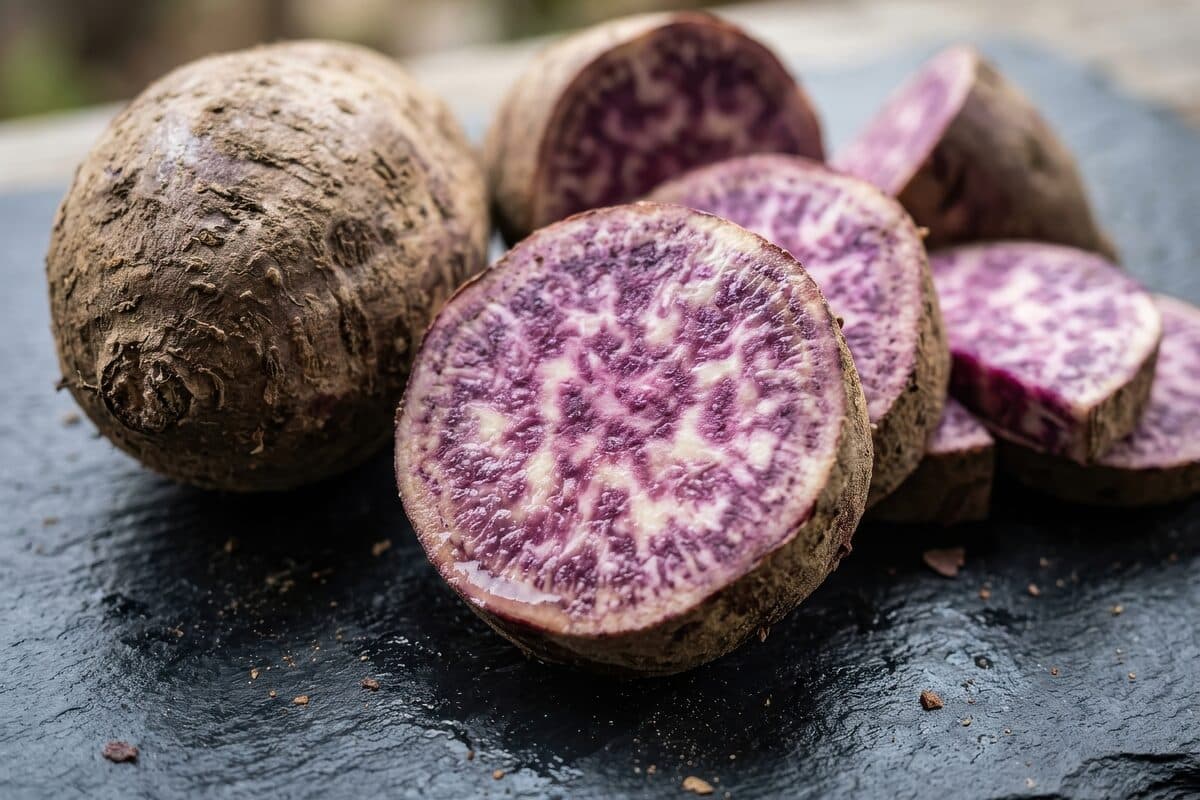
Taro gets the most attention. Breadfruit gets the best headlines. But ʻuala — the Hawaiian sweet potato — is the quiet third pillar of the traditional Pacific starch trio, and in some ways the most remarkable of the three.
It is a canoe plant: one of the roughly two dozen crops Polynesian voyagers selected, packed onto their double-hulled waka, and carried with them as they settled the Pacific over a thousand years. No grocery stores, no supply chains — just seeds and cuttings chosen for their ability to survive long ocean crossings and thrive in new volcanic soils.
The fact that Hawaiian sweet potato shares genetic ancestry with South American varieties is also one of the more compelling pieces of evidence that pre-contact Polynesians reached the Americas and returned — centuries before Columbus left Portugal.
What ʻuala tastes like
Hawaiian sweet potato comes in orange- and purple-fleshed varieties. The purple variety has attracted most of the nutritional research and, in the last decade, most of the culinary attention.
Compared to the orange sweet potato at a typical US grocery store:
- Less sweet. The flavor is earthier, more restrained, with a subtle nuttiness the orange variety doesn't have.
- Denser texture. Less watery after cooking — which means it roasts and fries better.
- More vivid color. The interior stays bright purple-lavender after cooking, which makes it striking on a plate.
The orange variety tastes closer to what most Americans think of as a yam — sweet, soft, caramelized at the edges when roasted. Both are worth cooking. The purple variety is worth seeking out.
Why it matters nutritionally
The Okinawan sweet potato — a variety closely related to Hawaiian ʻuala, with the same purple flesh — became one of the most studied foods in longevity research after Okinawa was identified as a Blue Zones region: a place where people live measurably longer with lower rates of chronic disease.
Traditional Okinawan diets before modernization derived roughly 67% of calories from purple sweet potato. Researchers who studied this population found extremely low rates of heart disease, cancer, and type 2 diabetes. Within two generations of the dietary shift toward processed food, those numbers moved toward the global average.
Key nutritional properties:
- High in anthocyanins — the purple pigment is a potent antioxidant, the same class of compounds found in blueberries, associated with reduced inflammation and cardiovascular protection
- Low glycemic index for a starchy food — slower blood sugar rise than white potato, white rice, or bread
- High in potassium and vitamin C — exceeds most root vegetables on both measures
- Rich in resistant starch — feeds beneficial gut bacteria and supports insulin sensitivity
How to cook it
Roast it whole. Pierce the skin a few times with a fork, roast at 400°F for 45–55 minutes until completely soft. The skin becomes lightly crispy; the inside stays dense and creamy. Finish with ʻAlaea Hawaiian sea salt — the mineral-rich red-clay salt is the traditional pairing.
Cube and steam. Peel, cut into 1-inch pieces, steam 20–25 minutes. Toss with coconut oil and salt. A two-tier bamboo steamer handles ʻuala perfectly alongside fish or greens — a whole meal at once.
Make a coconut mash. Cooked ʻuala mashed with full-fat coconut milk and a pinch of salt is one of the better things you can do with a root vegetable. The purple variety produces a pale lavender mash — unusual, visually striking, and genuinely good with grilled fish.
Fry it. Slice thin and fry in coconut oil until the edges crisp. The purple variety holds its color well; the orange variety caramelizes at the edges. Both make excellent chips.
Where to find it
- Asian grocery stores — usually labeled "Okinawan sweet potato" (purple flesh) or "Japanese sweet potato" (cream-fleshed with purple skin). Both are close relatives of Hawaiian ʻuala and cook identically.
- Whole Foods and natural grocers — the purple variety is increasingly common
- Farmers markets in California, Hawaii, and South Florida (fresh, seasonal)
- Standard supermarkets — the orange-fleshed American sweet potato is the easiest substitute if you can't find the purple variety. The flavor is sweeter but the cooking methods are identical.
ʻUala, taro, and breadfruit form the carbohydrate backbone of The Pacific Plate — our 30-recipe collection built around the same ancestral ingredients Polynesian voyagers carried across the Pacific.
Some links in this post are affiliate links. We earn a small commission if you buy through them, at no cost to you.