Recipes
Whole Fish in Banana Leaf: The Oldest Trick in the Pacific Kitchen
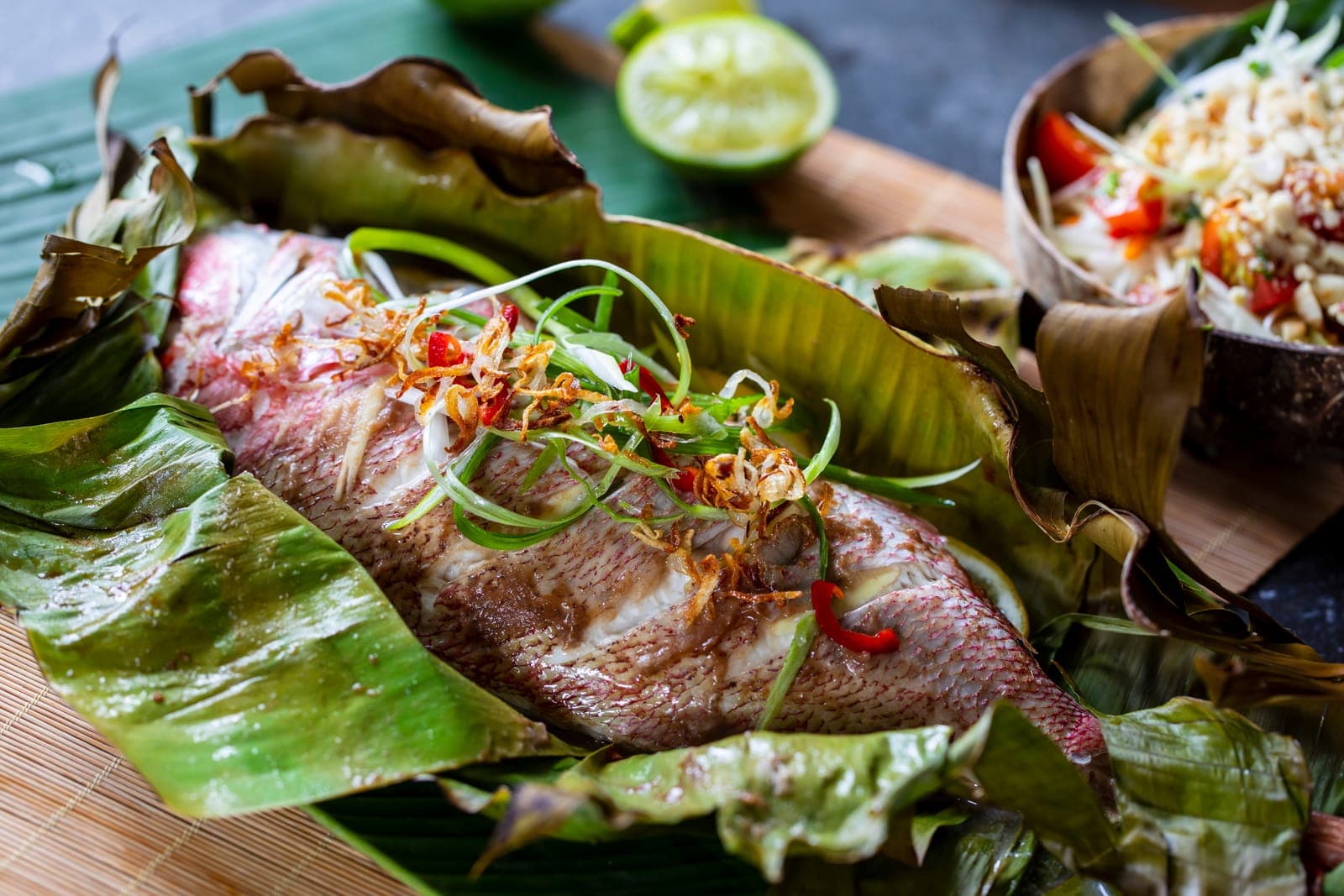
A whole fish is the centerpiece the Pacific kitchen reaches for, and wrapping it in a banana or tī leaf before it meets the fire is the oldest trick there is. The leaf steams the fish in its own moisture, keeps it from sticking and tearing, and perfumes it faintly green. It looks like a great deal of work and is in fact very little. The hardest part is buying the fish.
Why the leaf
Long before foil and parchment, cooks across the Pacific, Southeast Asia, and the tropics reached for the broad, waxy leaves growing all around them. A banana leaf does three things at once:
- It steams. Wrapped tight, the fish cooks in the moisture it releases, staying tender instead of drying out over direct heat.
- It protects. Delicate skin doesn't stick to the grill grate or tear when you turn it.
- It seasons. Heated, the leaf gives off a subtle grassy, green aroma that settles into the flesh — something foil can never do.
If you can't find banana leaves (most Asian and Latin markets carry them frozen), a double layer of foil works for the steaming and protecting. You'll just miss the perfume.
Buying the fish
This dish lives or dies on freshness, so let the fish lead. Ask for a whole fish, 2 to 3 pounds — snapper, branzino, or sea bass are all ideal — scaled, gutted, and cleaned. Have the counter do the cleaning; there's no reason to do it yourself. Clear eyes, a clean ocean smell, and firm flesh are what you're after.
How to make it
- Prep the leaf. Pass each banana leaf briefly over a flame or hot burner until it turns glossy and pliable — this keeps it from cracking when you fold it.
- Score the fish. Pat it dry, then cut 3 diagonal slashes through the skin on each side, down to the bone, so it cooks evenly and takes the seasoning.
- Season. Rub the fish all over, and into the slashes, with melted coconut oil, Hawaiian or kosher salt, and pepper. Stuff the cavity with julienned ginger, sliced garlic, scallions, lime rounds, and a bruised stalk of lemongrass if you have it.
- Wrap. Lay the fish on the leaves and fold into a snug parcel, tucking the ends under. Tie with kitchen twine if it wants to open.
- Grill. Over medium heat (about 375°F), grill 12 to 15 minutes per side with the lid down. The parcel will char — that's fine. The fish is done when the flesh at the thickest point is opaque and pulls easily from the bone, about 130°F internal.
- Open at the table. Rest the parcel 5 minutes, then open it in front of everyone. Squeeze the reserved lime over the top and scatter with cilantro.
The payoff
Opening the parcel at the table is half the dish. The steam rises, the green smell of the leaf comes with it, and the whole fish is there to be shared — the most communal way to eat there is. Serve it with rice and something bright like lomi salmon, and you have a Pacific feast that took almost no real work.
Whole fish in banana leaf is one of the 30 recipes in The Pacific Plate, our collection of Pacific home cooking. The free sample gives you the first full section to try.
Some links in this post are affiliate links. We earn a small commission if you buy through them, at no cost to you.