Ingredients
Inamona: The Kukui Nut Relish at the Heart of Hawaiian Poke
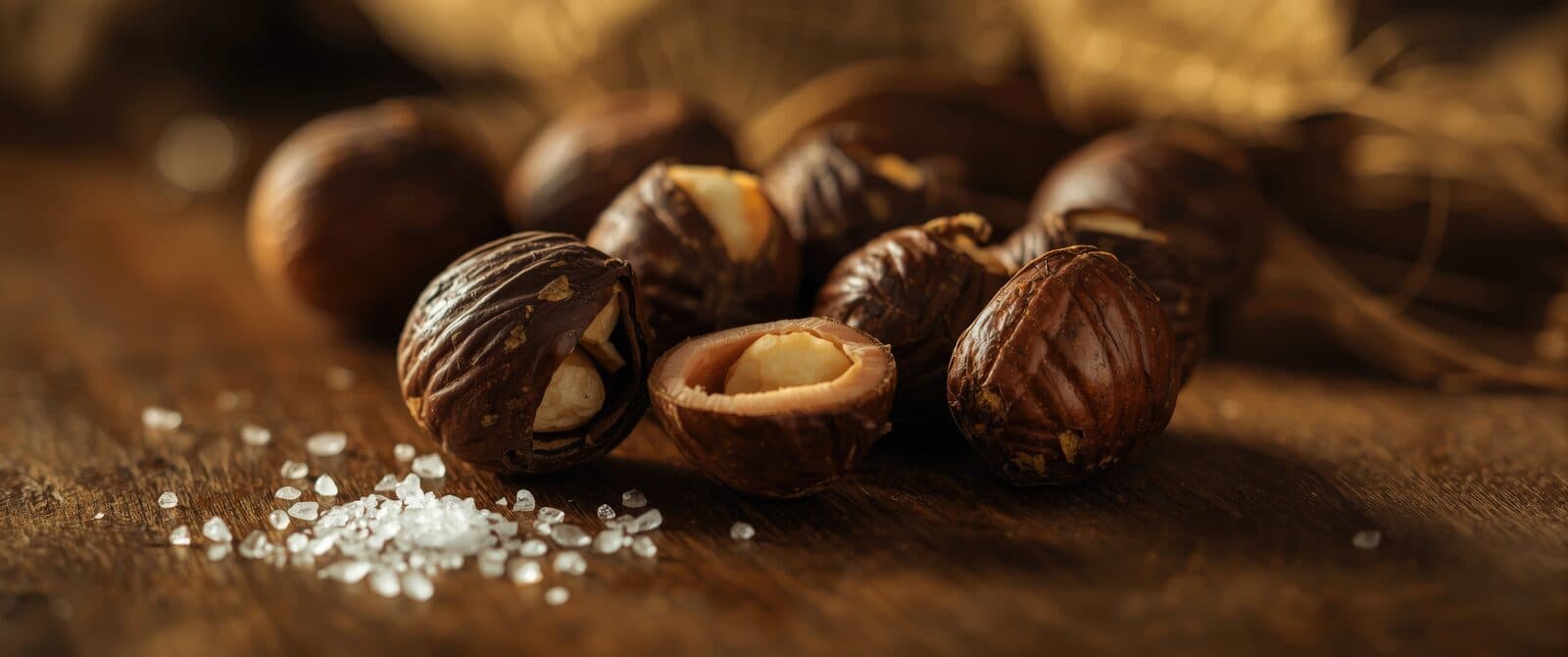
ʻInamona is a traditional Hawaiian relish made from roasted kukui nuts — candlenuts — pounded with sea salt into a coarse, oily, savory paste. For centuries it was the seasoning of Hawaiian poke, long before soy sauce and sesame oil arrived with later immigrants.
If you've only had modern poke-shop poke, you've never tasted it. The traditional bowl was almost startlingly simple: cubed raw fish, fresh limu seaweed, and a spoonful of ʻinamona. Three ingredients, each from the island itself.
What kukui nuts are
The kukui tree (Aleurites moluccanus) — the candlenut — is the official state tree of Hawaii. Its nuts are so rich in oil that Hawaiians once strung the kernels on coconut midribs and burned them as candles, each nut giving a few minutes of light. That same oil is what makes them valuable in the kitchen.
The flavor of a roasted kukui kernel is rich and nutty with a faint bitterness — somewhere between a macadamia and a walnut, but oilier than either. Pounded with salt, that richness turns into a seasoning that coats fish beautifully.
One important warning
Raw kukui nuts are a purgative. Eaten raw and in quantity, they act as a strong laxative and can make you ill. Roasting neutralizes this, which is why ʻinamona always begins with thoroughly roasted nuts. Never eat kukui raw, and treat it as a seasoning used in small amounts — not a snacking nut like macadamia.
This is the same pattern you'll see across the Pacific pantry: raw taro needs cooking, raw cassava needs leaching, raw kukui needs roasting. The traditional preparations exist for a reason.
How to make ʻinamona
The traditional version has two ingredients:
- Roast shelled kukui nuts until deeply golden and fragrant.
- Pound them with ʻAlaea Hawaiian sea salt — the mineral-rich red-clay salt — using a mortar and pestle until it forms a coarse, oily crumble. A granite mortar and pestle handles the oily nuts far better than a wooden one.
Some cooks add a little chili pepper or fresh limu. The ratio is roughly a teaspoon of salt to a cup of roasted nuts — adjust to taste. Stored in a sealed jar, it keeps for weeks.
How to use it
In poke. The original use and still the best. Toss cubed ʻahi with a spoonful of ʻinamona, fresh limu, and a little extra salt. No soy sauce required — though a splash of coconut aminos is a fine modern addition.
Over fish. A pinch of ʻinamona on grilled or raw white fish adds richness the way a finishing oil would.
With poi. A traditional Hawaiian plate — poi, salted fish, and a little ʻinamona on the side to season each bite.
Where to find it
True kukui nuts are hard to source on the mainland. Options:
- Hawaii-specialty online retailers sell ready-made ʻinamona and roasted kukui — search "inamona" or "roasted kukui nut"
- Southeast Asian markets carry the same species as candlenut, kemiri, or buah keras (used in Indonesian and Malaysian cooking). These must be cooked before eating — never use them raw, and treat them as a seasoning
- Macadamia nuts are the closest easy substitute for the flavor if you simply can't find kukui, though the texture and tradition aren't the same
ʻInamona is one of those ingredients that tells you how complete the old Hawaiian pantry was — a seasoning, a fat, and a condiment, all from a tree that also lit the house.
Traditional ʻinamona-and-limu poke is one of the recipes in The Pacific Plate — our 30-recipe collection built around the ancestral foods of the Pacific.
Some links in this post are affiliate links. We earn a small commission if you buy through them, at no cost to you.